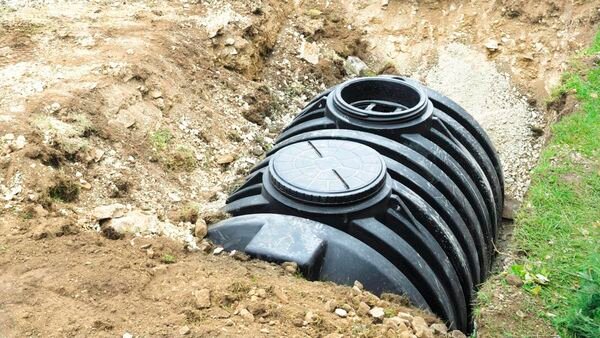
When filling your new propane cylinder for the first time, it is different than filling a used tank. When your new tank arrives, be sure to read the manufacturer's special "Purging Instructions" found on an adhesive label attached to the outside of the tank. Buy propane cylinder | propane tanks for sale
Caution: Do not attempt to take your new tank to a gas station or R/V dealer for the first filling and purging.
Go to a certified propane company in your community.
Once this initial process is done, you can fill your tanks any where desired.
Failure to follow these instructions will very likely result in many different problems with filling the tank and the operation of your appliances.
For more information see our blog "Why do propane tanks need to be purged?"
Don't forget about the requirement for tank re-certification.
Why not join our mailing list (see end of page) and stay current with the latest safety information and monthly specials on our propane tanks for sale.
The battlefields of World War II saw the widespread use of tanks in every environment possible. Whether it was the open fields of France with the German Blitzkrieg, the deserts of North Africa with the British, or the push into Germany by the Americans, tanks became critical to battlefield success. It then comes as no surprise that the tank would continue to be modified, refined, and improved for the conflicts after it, including Vietnam.
Those early tanks in World War II included the M3 Lee and the M4 Sherman. Key improvements were needed from one model to the next such as the positioning of the main gun and the thickness of the armor. The need for heavier armor and more firepower led to the introduction of the M26 Pershing late in the war. The Korean War would see the Pershing’s replacement, the M46 Patton, take the field. The M46 was advanced in nearly every category, from speed (30 mph) to firepower (90mm main gun), which proved useful in defeating North Korean T-34 tanks in the Korean War.
The tanks used in Vietnam
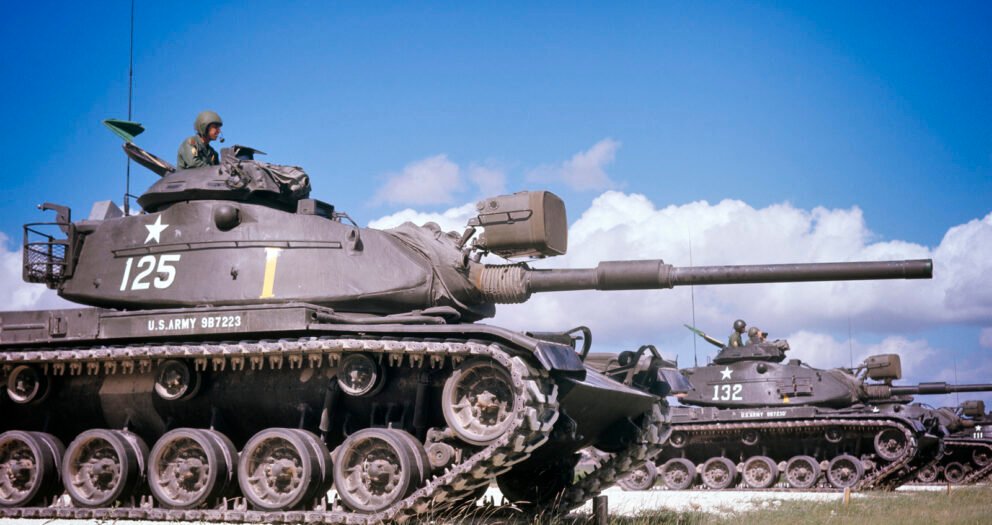
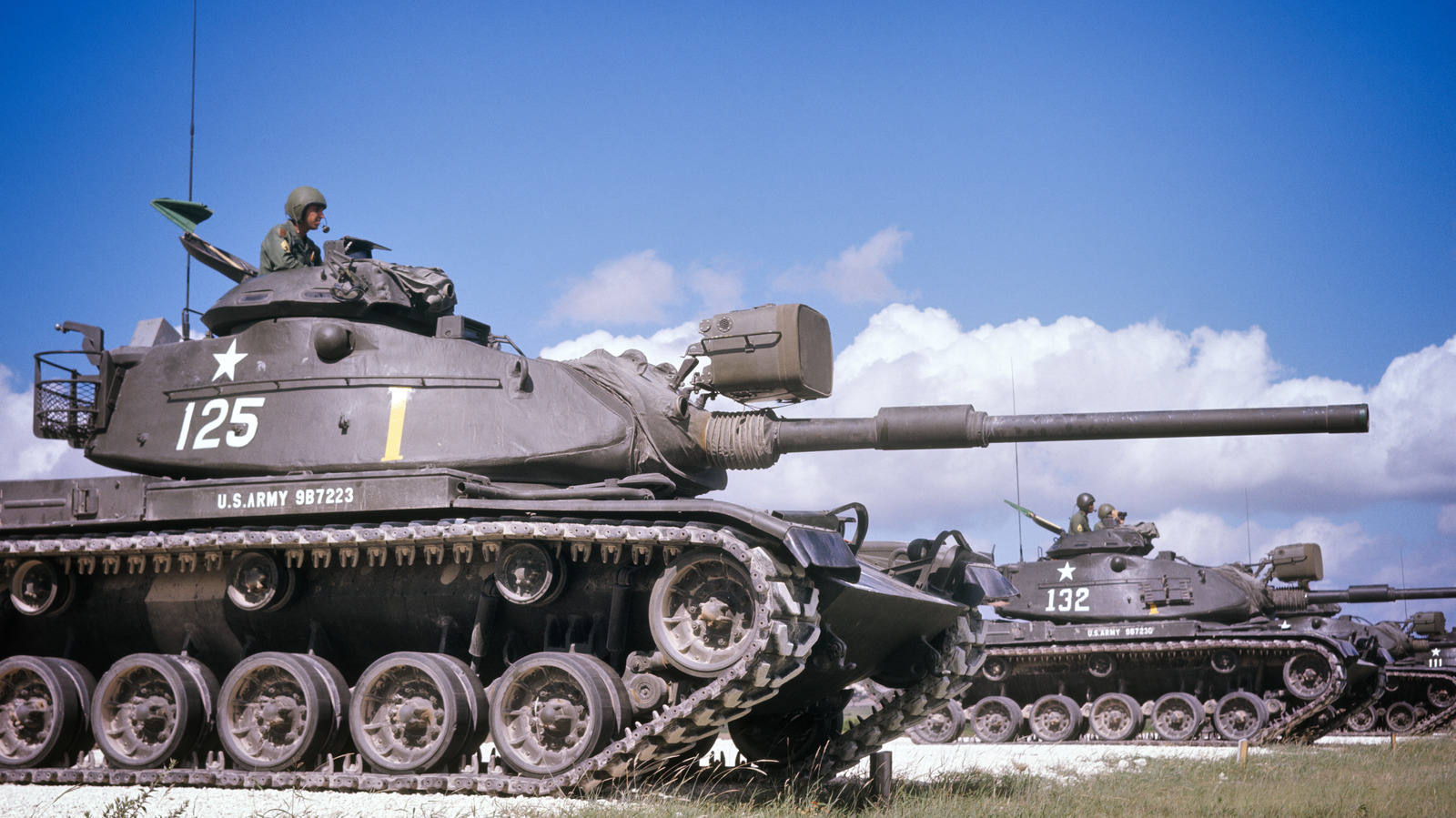
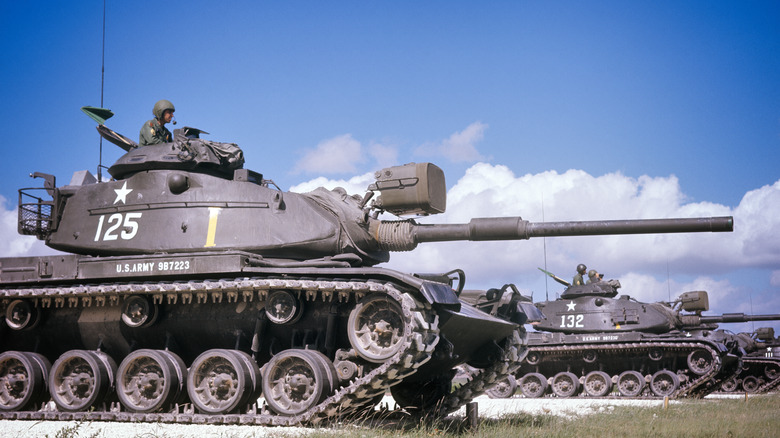
The war in Vietnam would see the deployment of America’s most advanced tank yet: the M48 Patton. The Patton was part of a massive Army tank modernization project to confront Soviet tanks more effectively (after all, it was also the Cold War). The M48 was armed with a 90mm main gun and .30 and .50 caliber machine guns. The tank was wrapped in armor that ranged from 120mm thick in the front to 44mm in the rear and could achieve a top speed of 30 mph. The U.S. would deploy the first M48s to Vietnam in March 1965 at Da Nang with over 600 eventually finding their way to the war.
The M48 Patton and all of its variants were not alone in Vietnam. Though not a tank, the M113 Armored Personnel Carrier (APC) was the counterpart to the M48 and a necessity for U.S. troops in the war. Developed in the 1950s, the M113 had light armor of between 12mm and 38mm thick with a .50 caliber Browning machine gun. It was manned by a crew of two and could transport up to 11 soldiers. The APC would first arrive in Vietnam in 1962 with many variations appearing during its service to fill various needs. These included the addition of M60 machine guns, flamethrowers, and even Vulcan 20mm Gatling guns.
The role of tanks in the war
Bettmann/Getty Images
At first glance, the role of the tank in Vietnam does not make sense as it was mostly a jungle environment. It would however play a critical role in providing fire support for infantry operations and at U.S. bases. Tanks were also used in convoy duty as well as providing additional firepower when engaging enemy bunkers. Tank and armored engagements were rare in Vietnam, but they did happen. One such event occurred in March 1969 at the Battle of Ben Het between four M48s and several North Vietnamese Army (NVA) PT-76 tanks and APC’s. The engagement would see one M48 take damage while two enemy tanks and one APC were destroyed.
The M113 was a workhorse in Vietnam as it go through water, making it invaluable to both the Army of the Republic of Vietnam (ARVN) and the U.S. It served well in operations against lightly armed enemy guerilla fighters initially, but its weak armor led to many unofficial modifications. Some of these modifications included adding more plate armor to the floor to protect against mines, installing shield plates to protect the gunners from snipers, and the addition of more machine guns. Tanks and APCs provided American and allied troops with needed firepower and protection in Vietnam, even while, according to Capt. Dale Dye they were “getting banged around seriously by NVA rocket gunners who played whack-a-mole with the tanks.”
CAIRO (AP) — Israeli troops seized control of Gaza’s vital Rafah border crossing on Tuesday in what the White House described as a limited operation, as fears mount of a full-scale invasion of the southern city and talks with Hamas over a cease-fire and hostage release remain on a knife’s edge.
The U.N. warned of a potential collapse of the flow of aid to Palestinians from the closure the Rafah crossing from Egypt and the other main crossing into Gaza, Kerem Shalom, from Israel, at a time when U.N. officials say northern Gaza is experiencing “full-blown famine.”
The Israeli foray came after hours of whiplash in the now 7-month-old Israel-Hamas war, with the militant group saying Monday it accepted a cease-fire proposal that Israel insisted fell short of its own core demands.
The high-stakes diplomatic moves and military brinkmanship left a glimmer of hope for a deal to bring at least a pause in the war, which has killed more than 34,700 Palestinians, according to local health officials, and has devastated the Gaza Strip.
WHAT TO KNOW TUESDAY
IN GAZA: An Israeli tank brigade has seized control of the Gaza Strip side of the Rafah border crossing with Egypt, authorities say, as Israel threatens to launch a wider offensive in the southern city. Follow live updates.
CEASE-FIRE PROPOSAL: Hamas said Monday it accepted an Egyptian-Qatari cease-fire proposal, but Israel said the deal did not meet its core demands and it was pushing ahead with plans to invade the southern Gaza city of Rafah. Still, Israel said it would continue negotiations. Here is what’s on the table on the cease-fire talks.
The Rafah and Kerem Shalom crossings are critical entry points for food, medicine and other supplies for Gaza’s 2.3 million people. They have been closed for at least two days, though the smaller Erez crossing between Israel and northern Gaza remains open.
By capturing the Rafah crossing, Israel gained full control over the entry and exit of people and goods for the first time since it withdrew soldiers and settlers from Gaza in 2005, though it has long maintained a blockade of the coastal enclave in cooperation with Egypt.
Israeli Prime Minister Benjamin Netanyahu called the capture of the crossing an “important step” toward dismantling Hamas’ military and governing capabilities, and Defense Minister Yoav Gallant said Israel would “deepen” the Rafah operation if talks on the hostage deal failed.
Osama Hamdan, a Hamas official based in Beirut, said the militant group would not respond to military pressure or threats and would not accept any “occupying force” at the Rafah crossing.
White House National Security Council spokesman John Kirby said the operation along the Gaza-Egypt border in eastern Rafah was not a full-on Israeli invasion of the city that President Joe Biden has repeatedly warned against on humanitarian grounds. Kirby said Israel described it as “an operation of limited scale and duration” aimed at cutting off Hamas arms smuggling.
Kirby expressed optimism about the cease-fire negotiations, saying Israel and Hamas “should be able to close the remaining gaps” to complete an agreement. He said CIA chief William Burns will attend further talks in Cairo with representatives from Israel, Egypt and Qatar. Hamas also sent a delegation to Cairo, which will meet separately with the Arab mediators.
“Everybody is coming to the table,” Kirby said.
Fighting forced the evacuation of the Abu Youssef al-Najjar Hospital, one of the main medical centers receiving people wounded in airstrikes on Rafah in recent weeks. It was not immediately clear how many patients were moved to other facilities.
The looming operation threatens to widen a rift between Israel and its main backer, the United States, which says it is concerned over the fate of around 1.3 million Palestinians crammed into Rafah, most of whom fled fighting elsewhere.
This photo provided by the Israel Defense Forces shows a tank with an Israel flag on it entering the Gazan side of the Rafah border crossing on Tuesday, May 7, 2024. (Israel Defense Forces via AP)
Biden warned Netanyahu again Monday against launching an invasion of the city after Israel ordered 100,000 Palestinians to evacuate parts of Rafah. But Netanyahu’s far-right coalition partners have threatened to bring down his government if he calls off an offensive or makes too many concessions in cease-fire talks.
A senior Biden administration official said late Tuesday that the U.S. had paused a shipment of bombs to Israel last week over concerns that Israel was approaching a decision on launching a full-scale assault on Rafah against U.S. wishes.
The U.S. has historically provided Israel enormous amounts of military aid, which has only accelerated since Hamas’ Oct. 7 attack that ignited the war. The paused shipment was supposed to consist of 1,800 2,000-pound (900-kilogram) bombs and 1,700 smaller ones, with the U.S. concern focused on how the larger bombs could be used in a dense urban setting, according to the official, who spoke on the condition of anonymity to discuss the sensitive matter. The official said no final decision had been made yet on proceeding with the shipment later.
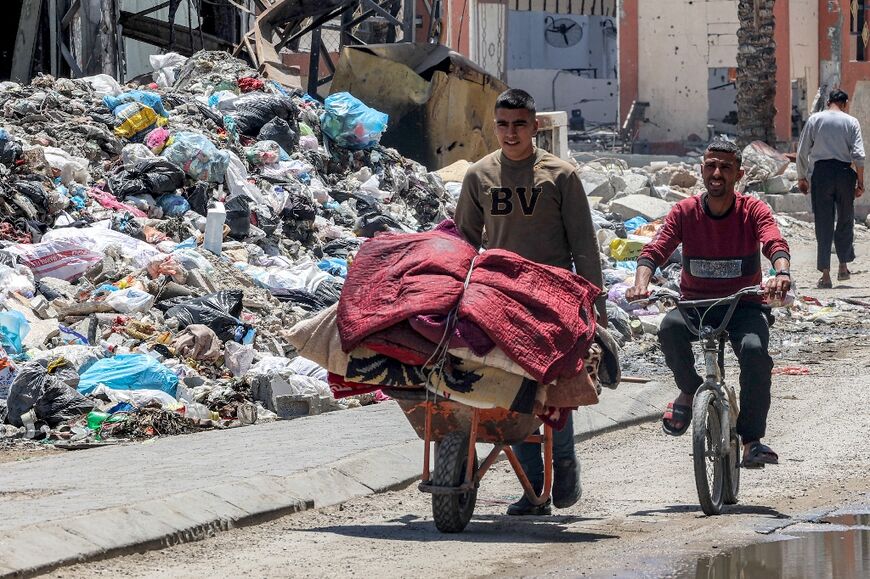
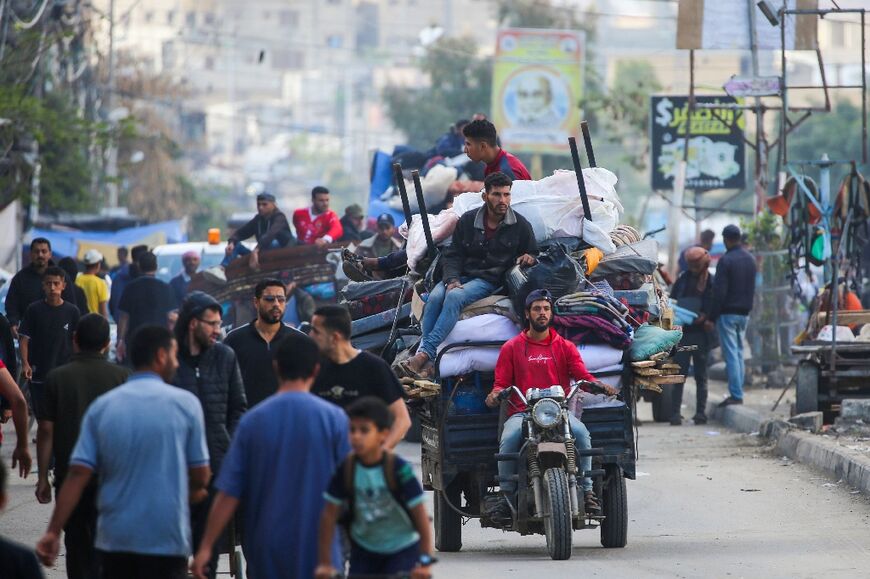
Palestinians’ cheers of joy over Hamas’ acceptance of the cease-fire deal turned to fear Tuesday. Families fled Rafah’s eastern neighborhoods on foot or in vehicles and donkey carts piled with mattresses and supplies. Children watched as parents disassembled tents in the sprawling camps that have filled Rafah for months to move to their next destination — which for many remained uncertain.
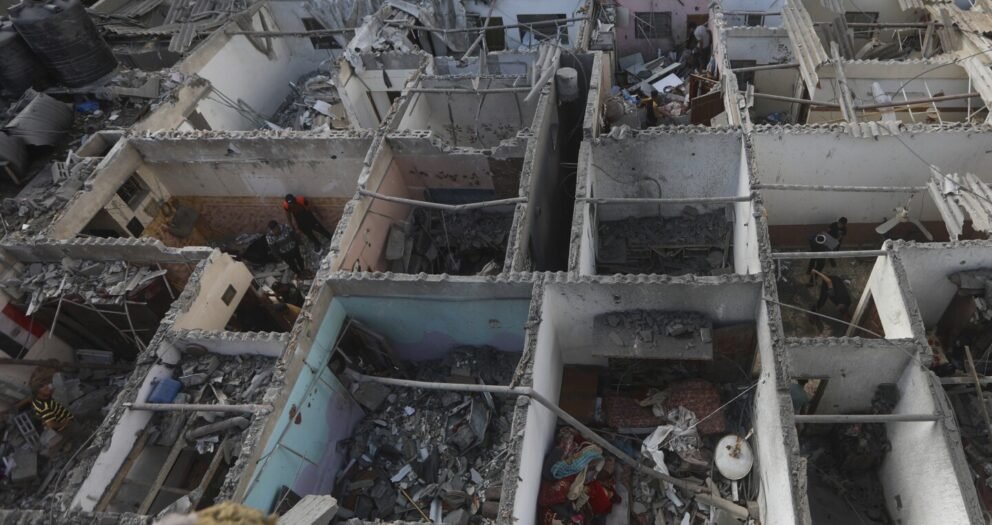
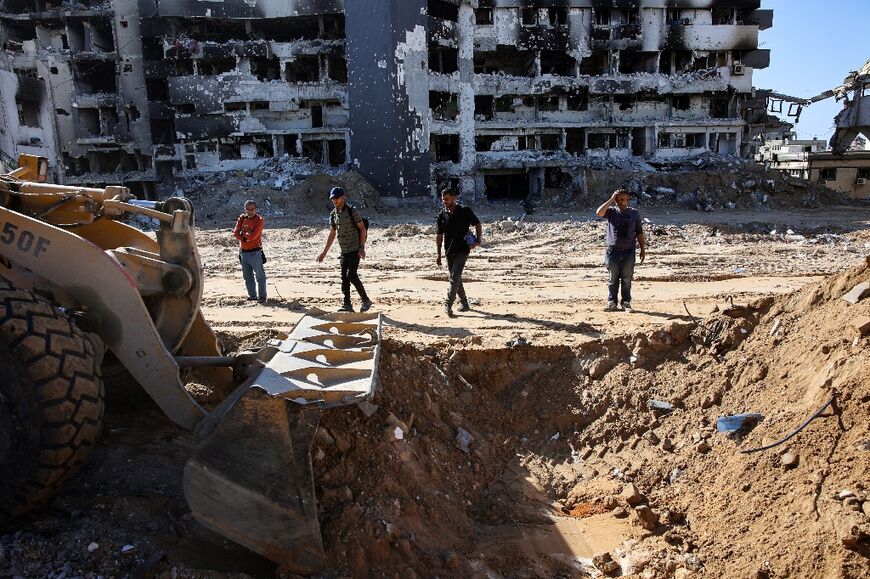
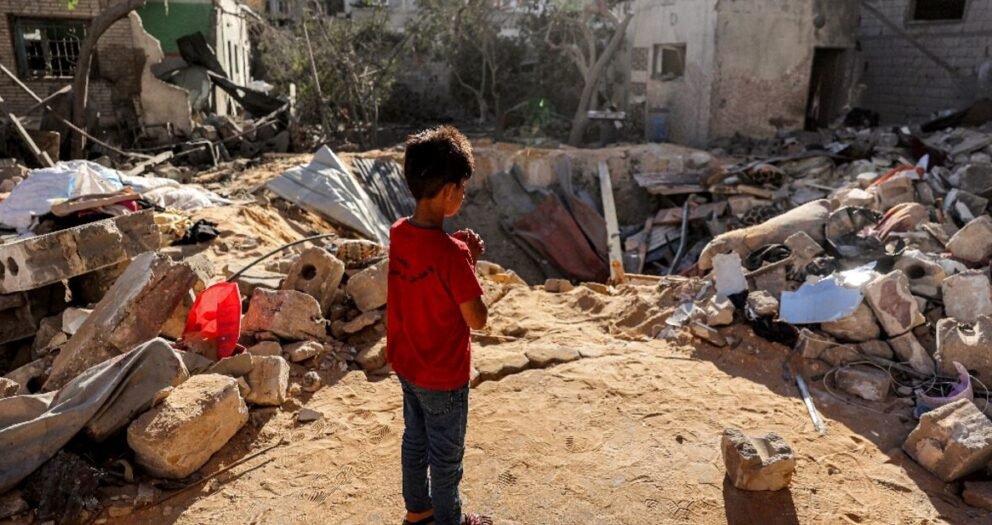
Palestinians look at the destruction after an Israeli strike on residential building in Rafah, Gaza Strip, Tuesday, May 7, 2024. (AP Photo/Ismael Abu Dayyah)
“Netanyahu only cares about coming out on top. He doesn’t care about children. I don’t think he’ll agree” to a deal, said Najwa al-Saksuk as her family packed up while Israeli strikes rang out amid plumes of black smoke.
Families of the Israeli hostages also saw their hope turn to despair. Rotem Cooper, whose 85-year-old father, Amiram, was among scores abducted during Hamas’ Oct. 7 attack, slammed what he said was the government’s inaction on a deal.
“We see all sorts of explanations — ‘This isn’t the deal that we gave them, Hamas changed it without saying something,’” Cooper said at a parliamentary hearing Tuesday. He questioned whether military pressure was an effective bargaining tactic.
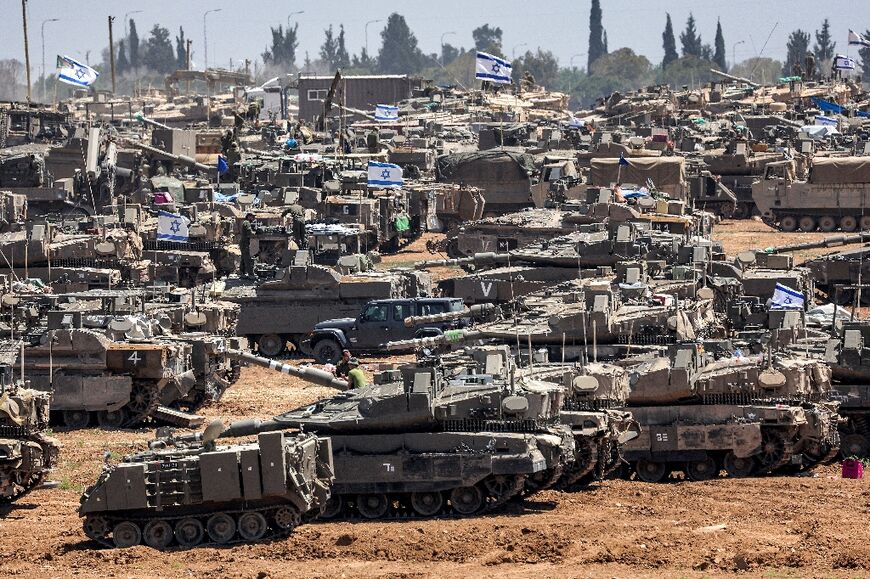
Israel’s 401st Brigade took “operational control” of the Gaza side of the Rafah crossing early Tuesday, the military said. Military footage showed Israeli flags flying from tanks in the area. It also said troops and airstrikes targeted suspected Hamas positions in Rafah.
The military claimed it had intelligence the crossing was “being used for terrorist purposes,” though it did not immediately provide evidence. It said Hamas fighters near the crossing launched a mortar attack that killed four Israeli troops near Kerem Shalom on Sunday and that more mortars and rockets were fired from the area Tuesday.
Israeli authorities denied the U.N. humanitarian affairs office access to the Rafah crossing Tuesday, said its spokesman, Jens Laerke. All fuel for aid trucks and generators comes through Rafah, and Laerke said there was a “very, very short buffer of about one day of fuel.”
A Palestinian wounded in the Israeli bombardment of the Gaza Strip is brought to a hospital in Rafah, southern Gaza Strip, Tuesday, May 7, 2024. (AP Photo/Ismael Abu Dayyah)
Israeli strikes and bombardment across Rafah overnight killed at least 23 Palestinians, including at least six women and five children, according to hospital records.
Mohamed Abu Amra said his wife, two brothers, sister and niece were killed when a strike flattened their home as they slept. “We did nothing. … We don’t have Hamas,” he said.
Egypt’s Foreign Ministry condemned the seizure of the Rafah crossing, calling it “a dangerous escalation.”
It has previously warned that any occupation of Rafah — which is supposed to be part of a demilitarized border zone — or an attack that forces Palestinians to flee into Egypt would threaten the 1979 peace treaty with Israel that’s been a linchpin for regional security.
Netanyahu has said an offensive to take Rafah — which Israel calls Hamas’ last major stronghold in Gaza — is crucial to destroying Hamas after its Oct. 7 attack in Israel when the militants killed some 1,200 people, mostly civilians, and took around 250 hostages.
The United States, Egypt and Qatar have spent months trying to broker a cease-fire agreement and the release of the estimated 100 hostages and remains of 30 others still held by Hamas, which insists it will not release them unless Israel ends the war and withdraws from Gaza.
Netanyahu and other top officials have publicly rejected those demands, saying they plan to launch the offensive after any hostage release and continue until Hamas is destroyed. For now, the hostages serve as Hamas’ strongest bargaining chip and potential human shields for its leaders.
An Egyptian official and a Western diplomat said the draft Hamas accepted had only minor changes in wording from a version the U.S. had earlier pushed for with Israeli approval. The changes were made in consultation with the CIA chief, who embraced the draft before sending it to Hamas, they said, speaking on condition of anonymity to discuss the deliberations.
According to a copy released by Hamas, the proposal outlines a phased release of hostages alongside gradual withdrawal of Israeli troops from Gaza and ending with a “sustainable calm,” defined as a “permanent cessation of military and hostile operations.”
Lidman reported from Jerusalem. Associated Press journalists Aamer Madhani and Zeke Miller in Washington, Ashraf Sweilam in el-Arish, Egypt, and Abby Sewell in Beirut contributed to this report.
Almost half of all septic tanks inspected last year failed, posing risks to human health and the environment.
This is despite a more than doubling of the grant available to fix faulty systems.
It has led to calls from the Environmental Protection Agency (EPA) for increased enforcement, and prosecutions where warranted, to secure repairs and to protect the environment and public health.
The details are contained in the EPA’s Domestic Waste Water Treatment System Inspections 2023 report.
Domestic wastewater treatment systems, mostly septic tanks, are used by householders to treat sewage. There are nearly half a million such systems in Ireland.
The EPA’s national inspection plan requires local authorities to complete a minimum of 1,200 septic tank inspections annually, particularly those located near rivers and in areas where septic tanks are co-located with household drinking water wells, and which are most at risk of contamination by faulty septic tanks.
The inspections report shows that of the 1,189 systems inspected last year, 532 failed because they were not built or maintained properly.
Where an inspection is failed, local authorities issue advisory notices to householders setting out what is required to fix the problem.
Enforcement
However, the report shows that there were 576 cases where issues notified to the owners of septic tanks over two years previously had still not been addressed.
This is despite the septic tank remediation grant increasing from €5,000 to €12,000.
The report also shows that local authorities took just eight legal cases last year against householders for alleged failure to resolve faulty sewage treatment systems, with 95% of all legal actions taken by just four local authorities — Wexford, Kerry, Mayo, and Limerick.
The report says the enforcement of advisory notices by local authorities is inconsistent, with significant numbers of failures combined with a low level of resolution found in Waterford, Roscommon, and Kilkenny.
Dr Tom Ryan, the director of the EPA’s office of environmental enforcement, said faulty septic tanks are a risk to human health and the environment and must be fixed.
The grant presents “a significant opportunity” for householders to fix their septic tanks and resolve open advisory notices, he said.
“It is critical that householders protect their family’s health and the environment by fixing the problems identified, drawing on the enhanced grants now available,” he said.
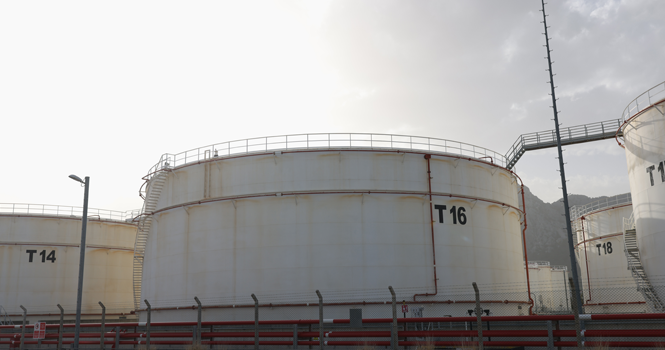
A Ukrainian drone attack sparked a fire and damaged several storage tanks at a fuel depot in Russia’s Krasnodar region, the region’s crisis administration said on Thursday.
About six drones were destroyed and debris fell on the refinery near the village of Yurovka, the administration said on the Telegram messaging app.
“Several tanks were damaged,” the administration said, adding no one was injured in the attack.
Drone attacks on energy facilities inside Russia’s territory have become more frequent in the past few months. Kyiv officials say that they conduct the attacks to undermine Russia’s war effort and respond to Moscow’s strikes on Ukrainian energy infrastructure.
The oil depot was last attacked on May 2, according to Russian state media. REUTERS
Crude oil inventories in the US fell lower than analyst estimates last week, while gasoline and distillate stocks rose.
Crude oil inventories in the US declined by 1.4 million barrels in the week ended May 3, compared to estimates for 1 million barrels, data from the US Energy Information Administration (EIA) showed.
Meanwhile, gasoline stocks were up by 900,000 barrels. Distillate stocks also increased by about 600,000 barrels.
Israeli warplanes struck Gaza’s crowded southern city of Rafah Thursday after US President Joe Biden vowed to stop supplying artillery shells and other weapons to Israel if a full-scale assault goes ahead.
It was the starkest warning yet from the United States, Israel’s main military provider, over the civilian impact of its war against Hamas.
An AFP correspondent and witnesses on Thursday reported Israeli strikes on several parts of Rafah, where the United Nations said 1.4 million people were sheltering.
“The tanks and jets are striking,” Tarek Bahlul said on a deserted Rafah street. “Every minute you hear a rocket and you don’t know where it will land.”
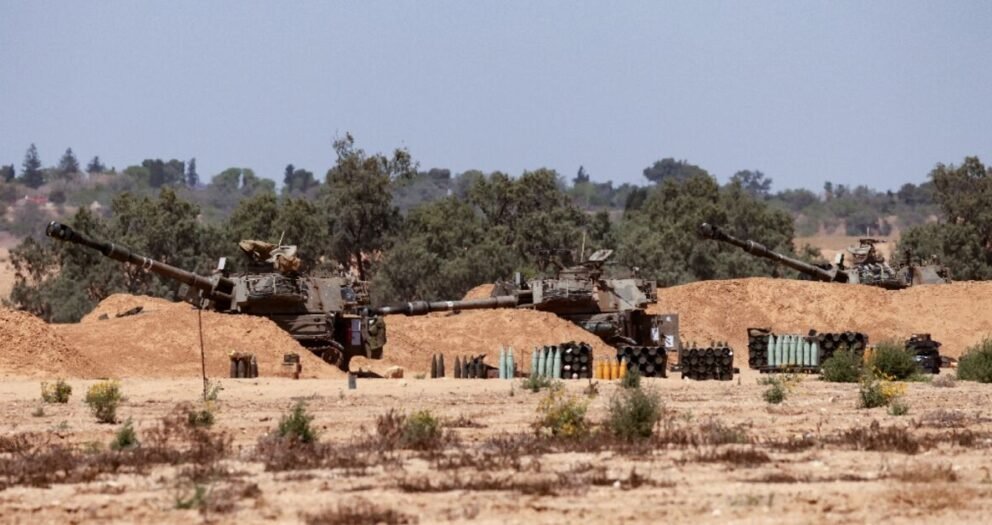
Israel has already defied international objections by sending in tanks and conducting what it called “targeted raids” in the east of Rafah, the city it says is home to Hamas’s last remaining battalions.
The Hamas authorities’ “emergency committee” in Rafah dismissed as “nothing but lies” Israel’s description of its operation as “limited”.
In an interview with CNN on Wednesday, Biden warned he would stop some US weapons supplies to Israel if it carried out its long-threatened ground assault.
Israel on Thursday called Biden’s comments “very disappointing”.
Biden told CNN: “If they go into Rafah, I’m not supplying the weapons that have been used… to deal with the cities.”
“We’re not gonna supply the weapons and the artillery shells that have been used.”
– Bomb delivery halted –
The fresh warning came after his administration paused delivery last week of 1,800 2,000-pound (907-kilo) bombs and 1,700 500-pound bombs as Israel appeared ready to attack Rafah.
“Civilians have been killed in Gaza as a consequence of those bombs,” Biden said. “It’s just wrong.”
Ties between the allies have become increasingly strained as Biden and other top Washington officials criticise Israel over its conduct of the war.
Pro-Palestinian protests have flared at universities across the United States with an intensity not seen for decades.
The Gaza war began with Hamas’s unprecedented October 7 attack on Israel, which resulted in the deaths of more than 1,170 people, mostly civilians, according to an AFP tally of Israeli official figures.
During their October attack militants seized some 250 hostages, of whom Israel estimates 128 remain in Gaza, including 36 who officials say are dead.
Israel’s retaliatory offensive has killed at least 34,904 people in Gaza, mostly women and children, according to the Hamas-run territory’s health ministry.
– Aid operations ‘crippled’ –
The United Nations agency for Palestinian refugees, UNRWA, said 80,000 people have fled Rafah since Monday, but “nowhere is safe”.
On Tuesday, Israel seized Rafah’s border crossing into Egypt, which had been the main entry point for aid.
The White House condemned the aid disruption, and the defence secretary later confirmed Washington had paused the bomb shipment.
In Israel’s first reaction to Biden’s threat, its UN ambassador Gilad Erdan called it a “very disappointing statement”.
Prime Minister Benjamin Netanyahu made no direct mention of the US threat but said in a statement: “If we have to stand alone, we will stand alone.”
It has been his repeated refrain in recent days as both international and domestic criticism of his handling of the war have intensified.
Israel’s military said Wednesday it was reopening another aid crossing into Gaza, Kerem Shalom, as well as the Erez crossing into north Gaza.
But the head of the UN humanitarian office in the Palestinian territories, Andrea De Domenico, told AFP that military activity at Kerem Shalom made civilian aid deliveries practically impossible.
He said the closure of the Rafah crossing, the only one equipped for fuel deliveries, had effectively halted aid operations.
“In Gaza there are no stocks” of fuel, he said. That “means no movement. It is completely crippling the humanitarian operations.”
UNRWA chief Philippe Lazzarini announced late Thursday that the agency was closing its east Jerusalem headquarters after the latest in a spate of attacks by “Israeli extremists” put its staff at “serious risk”.
Lazzarini said the compound would remain closed “until proper security is restored”.
– US aid ship leaves for Gaza –
A US container ship loaded with aid for Gaza left Cyprus Thursday in a new test of a maritime corridor to get relief into the besieged Palestinian territory, the Cyprus government said.
US military engineers have been assembling a temporary pier to unload aid deliveries but the work has been delayed by heavy seas.
“The platform is expected to be ready by the time the ship arrives in order for the aid to be unloaded and distributed to Palestinians in need,” Cyprus government spokesperson Yiannis Antoniou said.
US Secretary of State Antony Blinken has said the pier will “significantly increase” the volume of aid reaching Gaza but said it was not a “substitute” for greater land access via Israel.
Hamas called for an end to aid airdrops Thursday after two Palestinians were killed when an aid pallet crashed into a warehouse after its parachute failed to open.
At least 21 people have now been killed in Gaza airdrops by Arab and Western air forces that have gone wrong, according to the Hamas authorities.
Israeli and Hamas negotiating teams left Cairo Thursday after what the Egyptian hosts described as a “two-day round” of indirect negotiations on the terms of a Gaza truce, Egypt’s state-linked Al-Qahera News reported.
White House National Security Council spokesman John Kirby said the head of the US delegation, CIA director Bill Burns was also headed home.
“That doesn’t mean there aren’t still ongoing discussions,” Kirby said.
“We still believe that there’s a path forward, but it’s going to take some leadership on both sides.”
At a makeshift refugee camp in Rafah, Mazen al-Shami said she was fed up.
“We have no money and we don’t have the means to move from one place to another again and again. We have no means at all,” Shami said.
Displaced Gazan Marwan al-Masri, sheltering in Rafah, said on Wednesday “life has completely ceased” since Israeli tanks and troops entered the city’s east, sending desperate Palestinians fleeing north in the besieged territory.
More than 1.4 million people had crammed into Rafah, a city on the Gaza Strip’s southern border with Egypt, as Israeli forces pushed their way southward from the coastal territory’s north during months of war against Hamas militants.
Many in Rafah have been displaced multiple times during the seven-month war, and are now heading back north after Israeli forces called for the evacuation of the city’s eastern past, which hosts tens of thousands of people.
“Life has completely ceased in the downtown area of Rafah”, said 35-year-old Masri, who has been displaced from northern Gaza.
“The streets are empty of people, and markets are in a state of paralysis”, he told AFP.
“We all feel fear of any advancement in the invasion, as happened in the eastern areas, which are now completely empty of residents”.
Masri said he and his relatives “are all tense and frightened” by the incessant shelling that they feel is getting closer to them.
Ibtihal al-Arouqi, who was displaced from Al-Bureij refugee camp in central Gaza, said she has found herself once again homeless.
“We emerged from under the rubble of our house in Al-Bureij, and now due to intense shelling in Rafah, my children and I are in the street”, she said.
The 39-year-old said that only two weeks ago she gave birth by Caesarean section.
“We don’t know where to go. There is no safe place”, Arouqi added.
She spoke from west Rafah, where many Palestinians remain.
While it is relatively calmer than the city’s heavily bombarded east, the west has also been hit by shelling, an AFP journalist reported.
Both Arouqi and Masri said incessant shelling has filled the air with dust and smoke that make it hard to breathe.
“The situation in Rafah is chaotic,” said Mohammed Abu Mughaiseeb, a medical coordinator for Doctors Without Borders (MSF) charity in Rafah.
Himself displaced from Gaza City, he described “people carrying their things, mattresses, blankets, kitchen items on trucks” to flee east Rafah.
But “there’s no space anymore in the west of Rafah,” Abu Mughaiseeb told AFP.
The city’s Al-Najjar hospital was “closed, evacuated by the medical team to avoid what happened in Al-Shifa or Nasser”, he added, referring to two other Gaza medical facilities raided by Israeli forces during the course of the war.
– ‘No room’ –
Caught between Israeli shelling from the east, an Egyptian border to the south and the Mediterranean to the west, many fleeing Rafah went north.
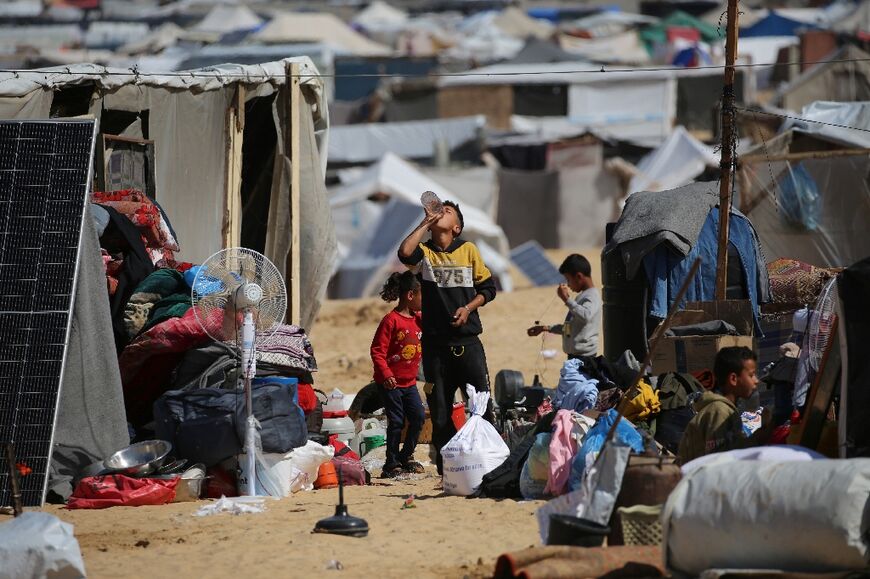
They headed towards the nearby city of Khan Yunis as well as Deir al-Balah in central Gaza, where thousands of tents filled up the coast.
Ahmed Fadel, 22, is one of many retracing his steps, returning to the northern parts of Gaza he had fled earlier on in the war.
Originally from Gaza City, he was first displaced to Nuseirat refugee camp in central Gaza, and then ordered to leave when Israeli troops entered the nearby Al-Bureij camp.
“We left and moved to Rafah but they pummelled and threatened the city, so we came to Deir al-Balah — which is already crammed,” he told AFP.
AFP journalists witnessed long lines of displaced Palestinians fleeing Rafah on cars, trucks, donkey-pulled carts, tuk-tuks or by foot, carrying what belongings they could.
AFP footage on Wednesday showed thousands of tents and shelters packed along Deir al-Balah’s coastal area.
On the ground streets were packed with people unloading belongings or selling wares.
“Deir al-Balah is a small city”, local merchant Abdelmajid al-Kurd told AFP.
“It’s a very small town that is now extremely overcrowded”, he said.
“There’s no room or facilities to accommodate these people.”
Lorem Ipsum has been the industry's standard dummy text ever since the 1500s, when an unknown printer took a galley of type and scrambled it to make a type specimen book.
Lorem Ipsum has been the industry's standard dummy text ever since the 1500s, when an unknown printer took a galley of type and scrambled it to make a type specimen book.